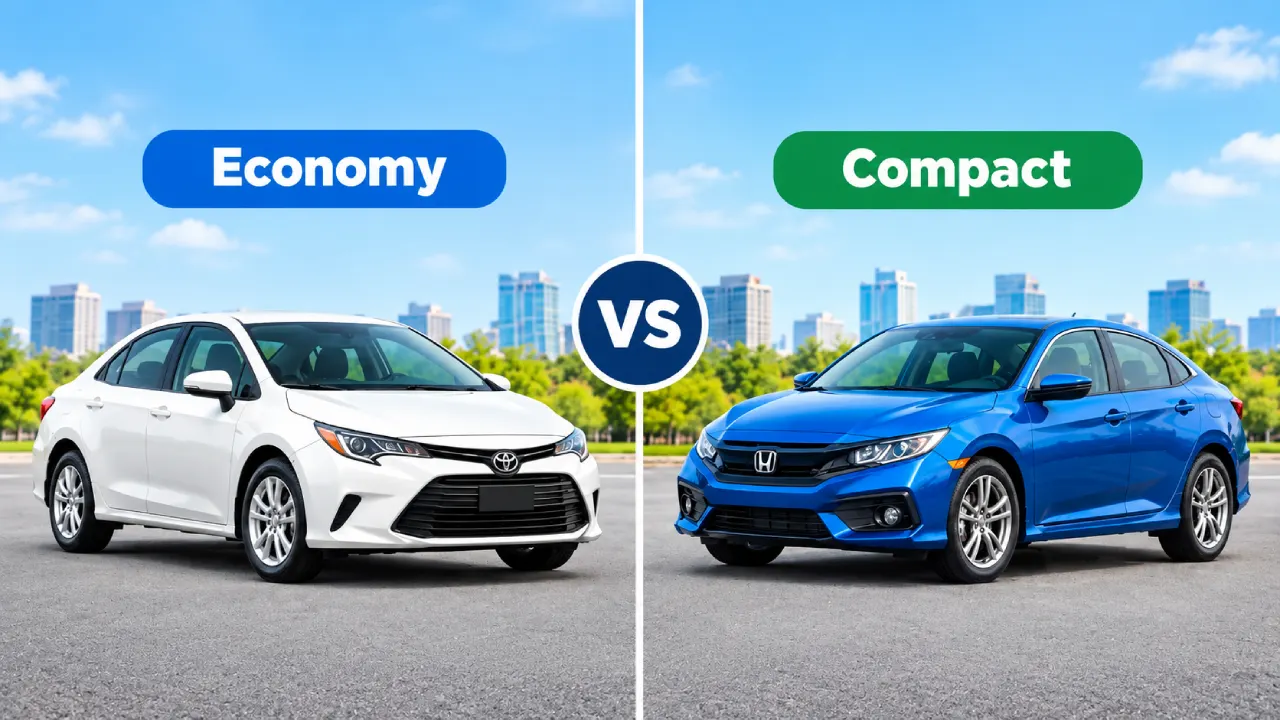
Economy and compact cars are common options in rental fleets, with relatively modest differences in rental rates. However, selecting the appropriate vehicle class can significantly affect passenger comfort, luggage capacity, and overall suitability for a particular journey. In Tallahassee, travel needs can range from short local trips between the university and the Capitol to longer highway journeys toward the Gulf Coast.
Economy vs Compact: Quick Comparison
Economy and compact cars differ mainly in size, space, comfort, and price. Economy cars are smaller and generally more affordable, while compact cars offer more passenger and luggage space.
| Feature | Economy Car | Compact Car |
|---|---|---|
| Size | Smallest in the fleet | One step larger |
| Typical seating | 4 adults comfortably (5 legally) | 5 seats, more rear legroom |
| Luggage | 1 large + 1 small bag | 2 large bags + small items |
| Typical models | Mitsubishi Mirage or similar | Nissan Versa, Toyota Corolla, Hyundai Elantra or similar |
| Fuel efficiency | Excellent | Very good |
| Ride comfort | Basic, best for short trips | Better for longer drives |
| Daily rate | Lowest, starting from $20 | Slightly higher, starting from $25 |
| Best for | Solo travelers, couples, city errands | Small families, business trips, mixed driving. |
Exact models vary by provider and change with fleet rotation, and most rental companies book by category rather than a guaranteed model. Treat the examples above as a guide, not a promise.
Economy Car
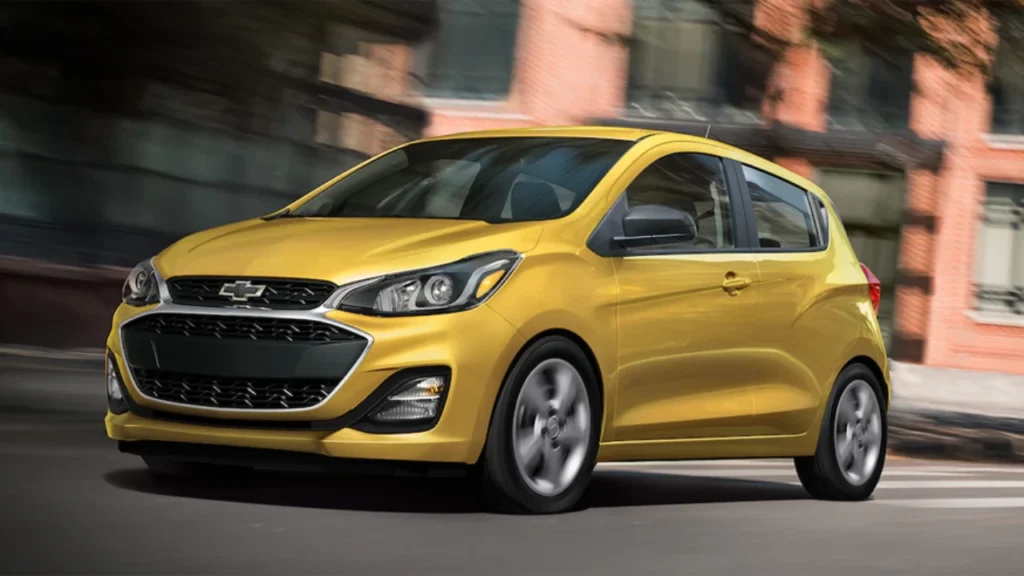
Rear seats are tight for adults on long drives, and the trunk usually holds one large suitcase plus a small bag. This is enough for short trips but can feel limiting on a road trip.
- An economy car is the entry-level class, built for low cost and low fuel use.
- Engines are small, cabins are simple, and trunk space is limited.
- Most current models include air conditioning, power windows, and Bluetooth. Advanced driver-assist features are less common.
Compact Car
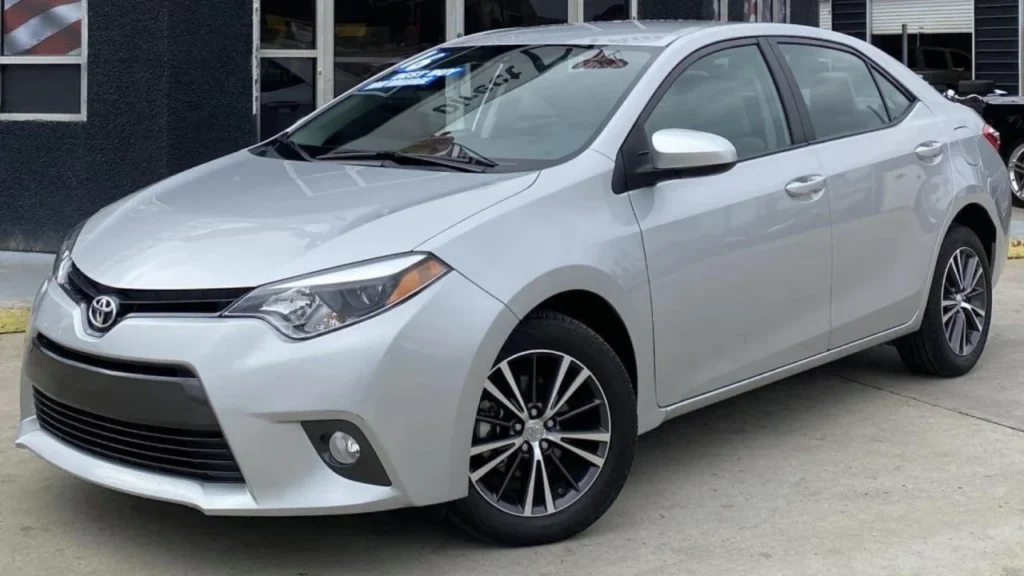
Compact cars generally ride more efficiently, produce less road noise, and handle highway speeds with less engine strain. Many also include touchscreen displays, backup cameras, and phone integration as standard.
- A compact is one class above economy.
- It is slightly longer and wider, with a larger trunk and more rear legroom.
- The back seat is comfortable for adults.
Key Differences: Economy and Compact Cars
Economy and compact cars differ in size, comfort, luggage capacity, and features. Although the differences are not substantial, they are noticeable.
Space and luggage: This is the most important difference. An economy car suits one or two travelers with light bags. A compact fits two large suitcases with room to spare, which matters for visitors arriving by air with checked luggage. A couple with two checked bags should choose a compact. With a third passenger, A compact may be a more practical choice.
Comfort on longer drives: Around town, the two classes feel similar. On the highway, compacts are steadier, quieter, and less tiring over an hour or more. Economy cars are fine on the interstate, but the small engine can feel strained when passing or merging.
Fuel economy: Economy cars usually deliver the best mileage in the fleet, often in the high 30s per gallon. Compacts typically achieve the low-to-mid 30s. On a short rental, the fuel savings are usually smaller than the difference in daily rate.
Features and technology: Economy cars cover the basics. Compacts more often add larger infotainment screens, better safety technology, and more efficient transmissions, which help with navigation on unfamiliar roads.
Price: Economy is almost always the cheapest option, but the gap is usually a few dollars per day. On a weekend rental, the difference is minor. On a two-week or long-term rental, it adds up. Rates change with season, local events, and demand, so compare both classes for the exact rental dates.
Tallahassee Driving: Which Class Matches the Best
Tallahassee is easy to drive, but parking near the Capitol, Cascades Park, and the university campus can be tight. A smaller car is easier to park and maneuver in crowded garages. Most local trips involve moderate distances along roads such as Capital Circle and Thomasville Road, and both classes handle these well.
Longer trips to destinations such as Wakulla Springs, the Gulf Coast beaches, or Panama City involve more highway driving on routes such as US-98 and I-10. For these journeys, a compact car provides additional passenger and luggage space and may offer greater comfort over extended drives.
Choose an Economy Car for:
- Solo travel or a couple with light luggage.
- Driving that stays mostly within Tallahassee
- The lowest daily rate.
- Tight parking near campus or downtown.
- Short rentals, such as a weekend or a business day.
Choose a Compact Car for:
- Two or three passengers, or two large suitcases.
- Trips to the Gulf Coast or other cities.
- A quieter, more comfortable ride.
- Extra technology and safety features.
- A price gap small enough to justify the added space.
Rental Companies with Economy and Compact Cars
Several major rental companies operate in and around Tallahassee and offer economy and compact vehicle categories.
- Hertz Car Rental
- Enterprise Rent-A-Car
- Budget Car Rental
- Avis Car Rental
- Alamo Car Rental
- National Car Rental
Locations to Rent Economy and Compact Cars in Tallahassee
Economy and compact rental cars may be available at several types of rental locations in Tallahassee, including:
- At Tallahassee International Airport
- Locations near Florida State University
- In Downtown Tallahassee
- Capital Circle
- West Tennessee Street
NOTE: However, renting at TLH is convenient for travelers arriving by air.
Booking Tips for Economy and Compact Car Rentals
A few considerations can help travelers choose the right economy or compact rental car in Tallahassee.
- Book by category: Most providers guarantee a class, not a specific model.
- Check luggage capacity: Compare the stated bag limits and count bags honestly.
- Compare the price gap: If a compact costs only slightly more, the upgrade is usually worthwhile.
- Book early for busy periods: Home football games, graduations, and legislative sessions reduce availability, and economy cars often sell out first.
- Confirm age and payment rules: Drivers under 25 may pay a young-driver fee, and card requirements vary by provider.
- Do not count on free upgrades: If the booked class is unavailable, an upgrade may be offered at the counter, but it is not guaranteed.
The choice between economy and compact comes down to three factors: the number of passengers, the amount of luggage, and the distance to be driven. Economy offers the lowest price and easiest parking for short, light trips. A compact costs slightly more and offers more space, comfort, and stability on the highway. For trips within Tallahassee with light luggage, economy is enough. For heavier luggage, an added passenger, or travel out of town, a compact is usually the small difference.
Frequently Asked Questions
Size. A compact is slightly larger, with more rear legroom, a bigger trunk, and a more efficient ride. Economy cars are the smallest and cheapest class.
Usually not. The difference is often a few dollars per day, though it varies by date, provider, and demand.
Typically one large suitcase plus a small bag. A compact usually fits two large suitcases.
Economy cars usually have a small edge, but both classes are efficient. Over a short rental, the fuel savings between them are minor.
Generally no. Rental companies book by category and provide a comparable vehicle, though some providers offer guaranteed-model options at extra cost.
Yes, generally. Compacts tend to be quieter and steadier at highway speeds, which helps on longer trips such as drives to the Gulf Coast.
Yes. Their smaller size helps in tight downtown garages and crowded campus areas, though compacts are also small enough to park easily in most places.
A family of two adults and one child can manage in a compact. For four people with luggage, a midsize sedan or SUV is a more comfortable choice.